

The weather becomes a member of the team, on a ride in Tierra del Fuego. You’ll quickly learn that a morning’s cerulean blue can give way in moments to a grey, spitting sky. If you try to fight the elements, in this subpolar world, you will lose, every time. But meeting it without fuss — taking comfort in your poncho’s warmth as you canter through the rain, or tying it behind your saddle once the sun arrives — brings an easy resilience.
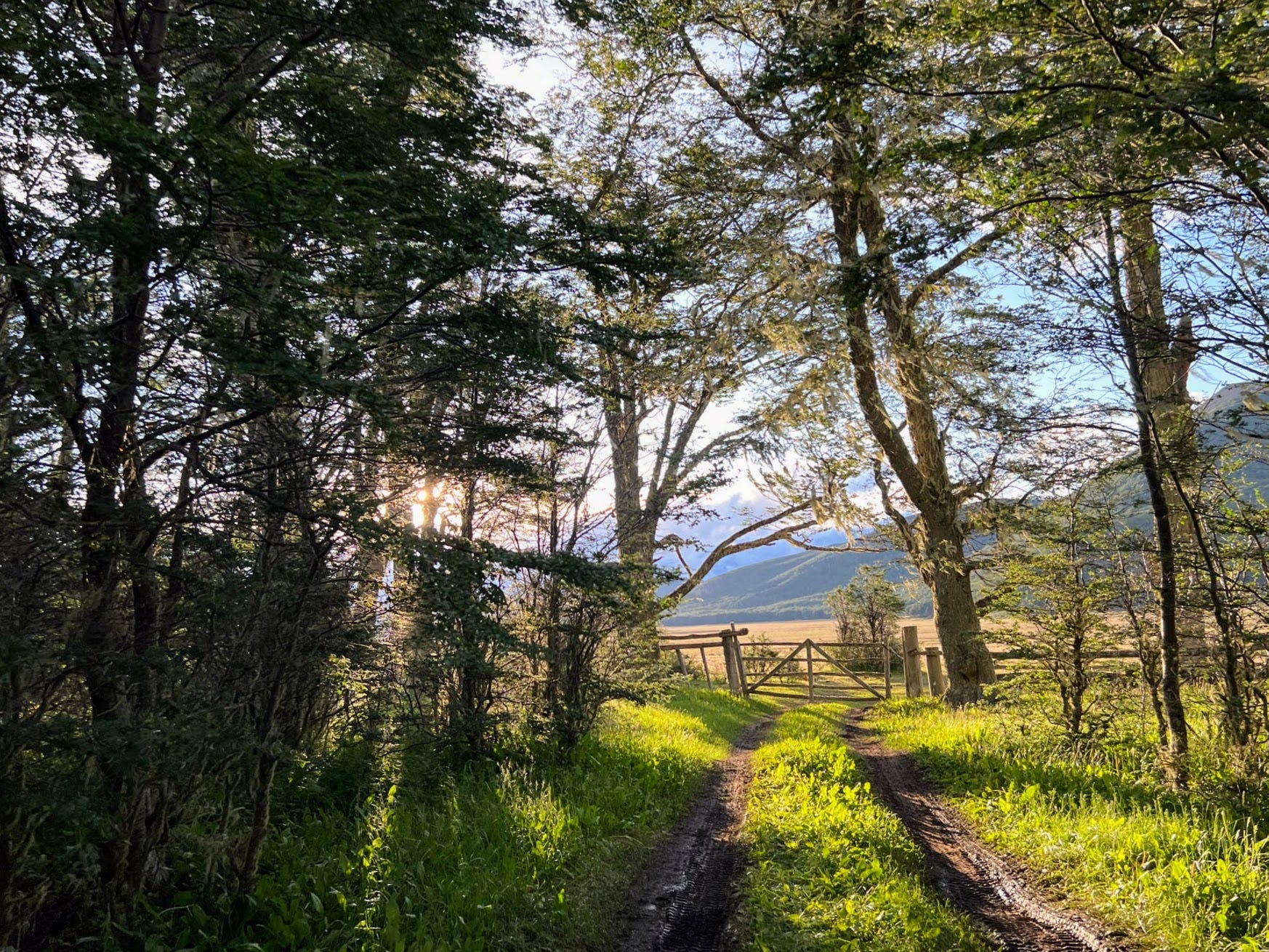
The land around Estancia El Boquerón was an admixture of open steppe and otherworldly stands of gnarled, mossy trees — lenga and ñire — the same southern beeches whose graveyard lay just a ride behind us, here webbed in the lacy lichen called old man’s beard. The riding changed with the topography. Amidst the trees, the horses placed their feet carefully, winding through the brambled patches; in the clearings, they broke into canter, embracing the easier gait.
It was a bit of an intermission. Rather than a day spent moving on, the ride began and ended at El Boquerón, offering a moment of gentler breath on the eight-day journey. By then, the group had created a rhythm of its own. You could hear it, inside the estancia, in the unforced conversations as people moved to and fro — pouring a bit of wine here, leafing through a family photo album found on a table there. Joining the scent of moss and rain and wet wool, the smell of wood smoke announced that preparations for the asado were well underway.
Gradually, the smell of the smoke and the roasting meat proved invitation enough. One by one, as if called by an invisible genie, we were drawn outside to the fire and its circle of rough-cut benches. The fire was the focus, of course; at its center was the star of the show: a whole lamb, recently slaughtered, lashed to a metal cross backed by a heat shield made from a repurposed metal barrel. This method, I was told, is called asador criollo. Nacho, the asador and head chef, had set up his prep station at a slab resting on posts of cross-cut logs. While Chucho, his second in command, tended the embers, Jacinto warmed his hands, and Colo prepared me a drink. As each of us found a seat at perfect proximity to the fire and the group, Marcos picked up a well-used guitar, strummed a few chords — like a conductor lifting a baton, this signaled the others — and together, they began to sing. The melody was unfamiliar, the lyrics in a language I don’t truly speak, but the message was the same the world over: community is made here.