

It’s amazing, what a computer can do. In just an hour or two, the trip is arranged. Planes to take you from here to there and then to an even smaller there: check. An appealing room reserved for your arrival at the far-away side of the earth: check. A little time on Instagram, whetting your appetite in 15-second snippets: check. Run the elements through a friendly chatbot, and voilà — your riding adventure awaits.
And that, in a nutshell, was how I planned my trip to Tierra del Fuego.
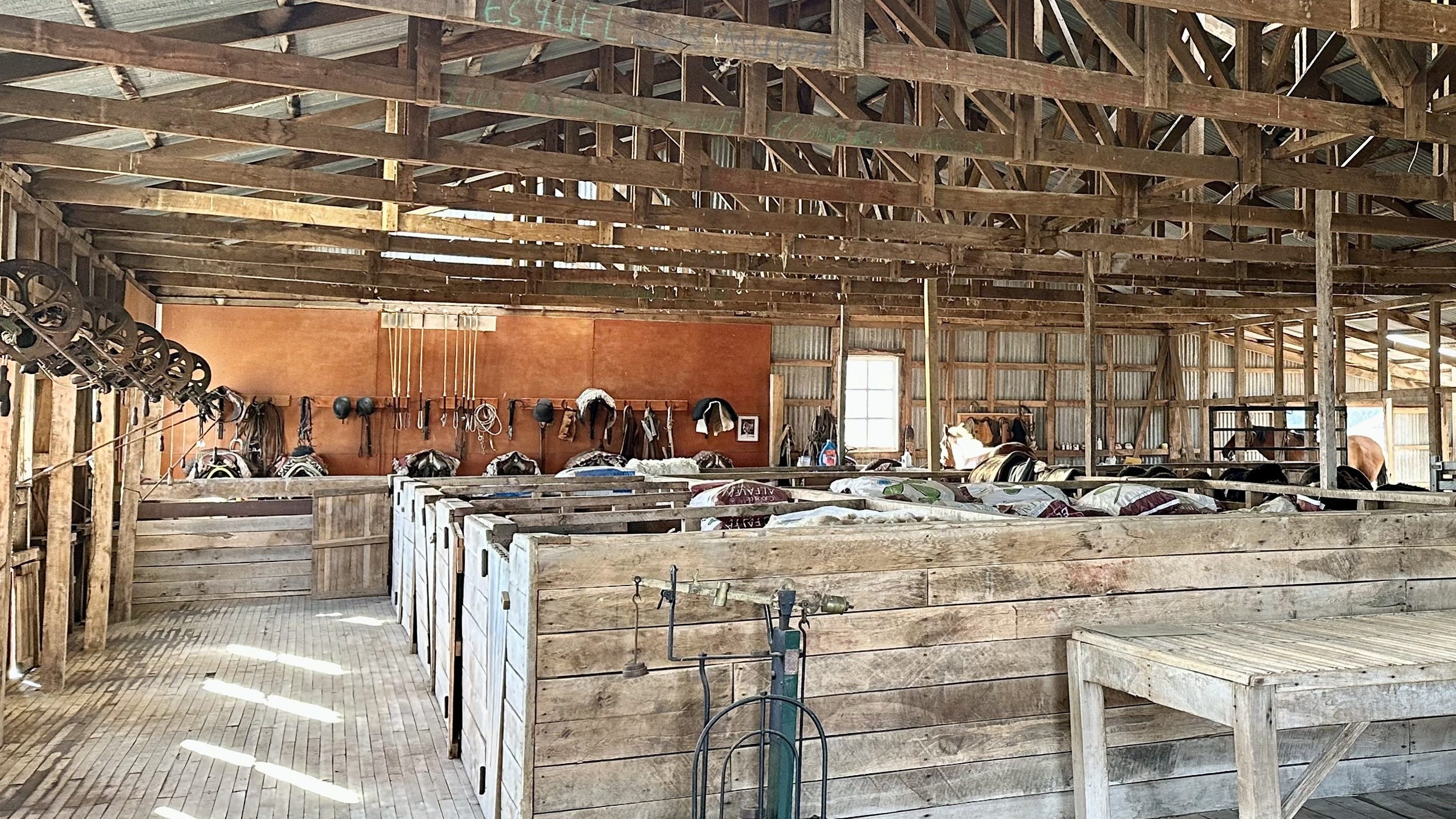
But then, I got off the plane. After all of that travel, the thousands of miles, I more or less tumbled out of the transport van at Estancia San José. Juggling the hubbub of luggage and logistics, I made my way the few paces to the rust-red shearing shed that serves as the gathering space for this estancia turned guest house.
As I walked through its oversized sliding barn door, my impulse to figure out what was where gave rise to something else, and I found myself standing stock still on the worn plank floor. To call the space cavernous would do it a disservice. Yes, the slanted tin roof reached high overhead, supported by a geometrically satisfying lattice of trusses and beams. Yes, the space was defined less by the presence of walls than by the arrangement of things within them. But what struck me most, although I couldn’t yet name it, was the way that it evidenced, in every detail, the power and labor and care shown by human beings working in community. An orderly array of shearing stands lining one wall, the well-worn work table, the tack hung on the far end; off to the side, the couches with hand-woven blankets, a family-style dining table and open fireplace, signaling food and community. I just stood there, struck by the visceral sense of what people can do when they join together. Even at the very end of the earth.
Right then and there, ahead of everything else — before the polite introductions and the effort to remember people’s names; before the drinks being prepared at the simple wooden console that served as the bar — I walked deeper into the room, past the machinery once used for shearing off the heavy wool, and towards the tack at the back. It was there, next to the saddles with their blankets and sheepskin layers, that I encountered my first Criollo.
Standing quietly — no cross-ties, here — he was being readied for our ride.
He was ready before I was. A horse can be saddled in a morning; the ground he stood on had taken far longer to make. To ride it well, I would first have to understand that story — and so, before the first mile, the land.